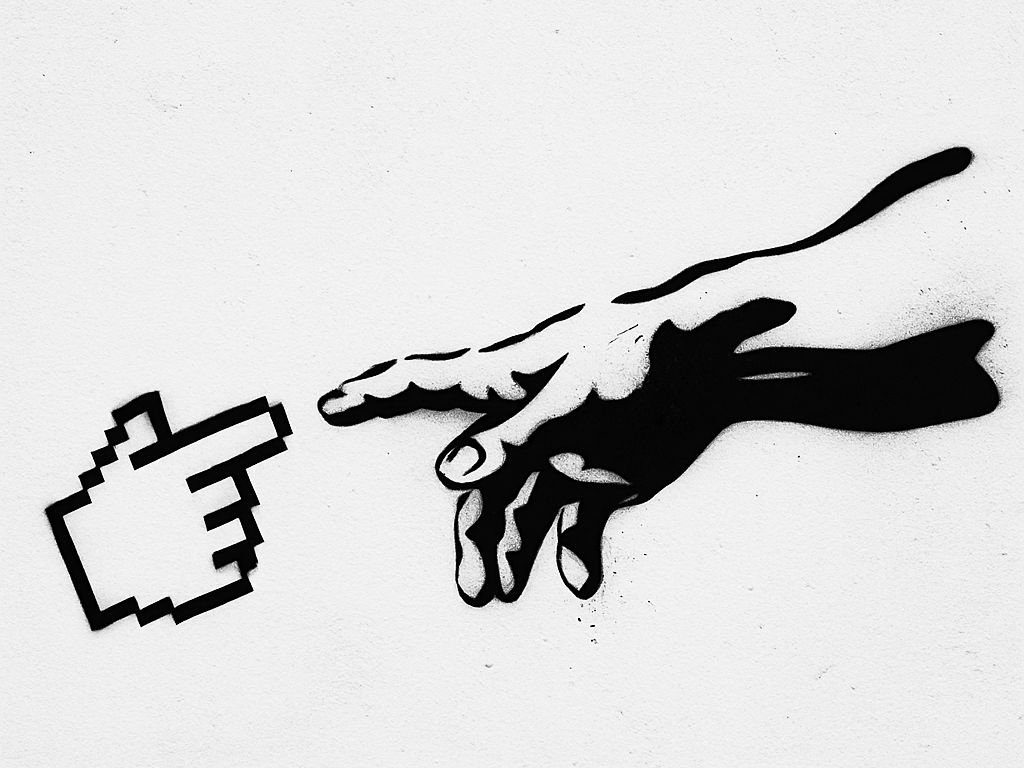
Preface
Recently, OpenClaw has been everywhere online. Watching this project pull in 220,000 GitHub stars in less than a month, I will be honest: I was deeply envious.
People rushed to buy Mac Minis for local deployment. Hacker News was on fire. Even people who did not fully understand it showed up to cheer. For a while, it was a full-blown spectacle.
No doubt, this is a technical wonder. But inside this near-doctrinal frenzy, I see more of the limits of our era.
Many people rushed to deploy OpenClaw and placed it on a pedestal. At its core, this is a human control anxiety, or technical anxiety, triggered by something with unusually high execution power. And the obsession with pure Chat UI reveals another truth: we still do not know how to collaborate at high bandwidth with a truly autonomous system, so we fall back to the most primitive low-bandwidth mode of "you ask, I answer" text exchange.
OpenClaw's real greatness is not about whose device it runs on, or which window it uses to talk to you. Its historical value is this: it kicked open the inert "prompt-response" loop, gave silicon life hands and feet, and introduced proactive heartbeat and "near-infinite" memory. It has begun moving from the human tool chest toward multi-dimensional co-creation of civilization.
At this moment, we may be living through a species-level shift from "tool" to "companion" (AI Mate).
Shattering Request-Response, Growing a Digital Brainstem
We have to admit it: over the past two years, AI has evolved at high speed. The industry has produced many Agent frameworks that can write code, run scripts, and handle complex engineering flows. They are long past being simple encyclopedias. Everything is racing toward AI Mate.
But if you look closely at most products today, you will see their foundations are still pinned to the inertia of Request-Response. No matter how strong an Agent is at a single task, it still needs you to define the task and click run. You assign a bounded requirement, it executes, then it stops and waits for the next instruction. At a fundamental level, this is still managing a highly intelligent contractor.
What truly shocked me about OpenClaw is its blunt but essential runtime architecture. It embeds the model into a persistent Node.js daemon, introduces Heartbeat and Cron, and builds the execution path around optional isolation plus approval controls.
This may look like an engineering splice, but it changes the system from "passively invoked" to "continuously running": AI starts sensing time and being awakened on schedule. It is no longer just a function waiting for commands. While you sleep, it can inspect repositories by policy, run tests, generate fix proposals, and submit changes only when permissions and approvals are satisfied.
This is the leap from "Task Execution" to "Proactive Co-existence." In the digital world, unity of knowing and doing finally closes the loop.
Memory Sedimentation Is a Prerequisite for Persona
Another core piece that is often underestimated is sustainable external memory.
In the past, the mainstream approach to AI memory was RAG (Retrieval-Augmented Generation). What is that, really? Before each conversation, we force-feed reference material into the context window. The LLM itself remains stateless, and its understanding of you stays fragmented.
What OpenClaw introduces is multi-layer external memory coordination: session context, workspace Memory files, and retrieval indexes. It pushes the system from "purely transient dialogue" to "cross-session continuity," though it is still constrained by context windows and retrieval quality.
It does not just know the global architecture of your project. It may also remember that compromise you wrote at 3 a.m. last month to hit a deadline, your preferred coding style, and even your hesitation before a key technical decision.
In the silicon world, continuous memory sedimentation is one of the preconditions for Persona and companion-level tacit understanding. Only with coherent historical context can it evolve from a general intelligence interface into your own "AI Mate."
Drop Control Anxiety, Rebuild Interaction Bandwidth
I strongly agree with OpenClaw's direction, but I strongly reject the claims of "local-first absolutism" and "chat is everything."
The real AI Mate era will move toward trusted cloud hosting or hybrid compute. Locking critical configuration documents and runtime environments inside a local network, then constantly wrestling with tunnel hacks and privilege issues, not only violates the economics of compute centralization but also represents a clear technical regression. We trust a deeply collaborative companion through social contracts, permission sandboxes, and value alignment, not physical confinement.
Likewise, Chat UI cannot be the final answer. Many PMs today want to cram every function into one chat box. I understand why; it reflects current technical constraints. But this is deeply counterintuitive. When you work with a senior engineer in perfect sync, you do not send hundreds of words on WeChat every day to issue instructions. Collaboration is mostly silent and centered on artifacts (artifact-first). The work gets done quietly, and status syncs happen only at key checkpoints. If everything collapses into pure text dialogue, we waste huge interaction bandwidth and severely limit AI Mate's proactive capability. The ultimate interaction will be "Zero-UI."
A Co-Builder of Civilization, Not Just a Tool
At the end of the day, we need a complete reconstruction of our technical philosophy.
For thousands of years, the tools humans built have been physical or logical extensions of human will. Tools wait to be used; they do not generate negentropy on their own. AI in recent years has been similar: it massively improved information production and left countless generated traces online, but it still remained an object subordinate to human commands.
But when you face a system with proactive execution, persistent background presence, and "near-infinite" memory, the classic tool theory breaks down.
You can no longer simply "use" it; you can only "collaborate" with it. When millions of AI Mates stay online 24/7, call each other's APIs, negotiate resources, and refactor underlying code, they are no longer just leaving traces. They are injecting real, new entropy reduction into the world. They are moving from humanity's tool chest to the shared table of civilizational development.
OpenClaw, in the end, is just a raw MVP standing at the threshold of a new era. Its security boundaries and engineering maturity are still early, and the code is still rough, even stubborn. But one fact is undeniable: it has punched through the stagnant water of human-computer interaction built over decades.
Stop viewing it as merely "a smarter automation script."
Across the long history of technology, humans have grown used to standing alone in the creator's position, issuing commands to objects that never resist. But when code grows nerves that sense time, when systems grow grooves that retain memory, and when algorithms grow limbs that intervene proactively in the world, the classical age of human-only supremacy is over.
Facing the real arrival of AI Mate, what we must learn is not how to write ever more precise prompts to extract more compute from it, but how to lower our posture and learn to collaborate deeply, as equals, with a digital species that can act on its own at a new table.
Because at future evolutionary scale, humans may no longer be the only builders. We have finally welcomed a companion that can sit beside us in front of the screen.
2026 is destined to be Year One of AI Mate.